Earth Day 2025 is taking place on Tuesday 22nd April so we thought what better time to discuss some great tips for sustainable gardening.
Sustainable gardening can benefit not just your own personal garden but your wider local environment too. Little Muddy Boots exists to help children spend more time in nature and our hope is that by encouraging this connection to the outdoors, we help the next generation of Earth’s caretakers understand how best to look after the planet.
Sustainability is a key value of ours and underpins many of our activities that we carry out with the children in the gardens.
Here are 5 of our top tips for sustainable gardening.
Repurpose items for growing seeds
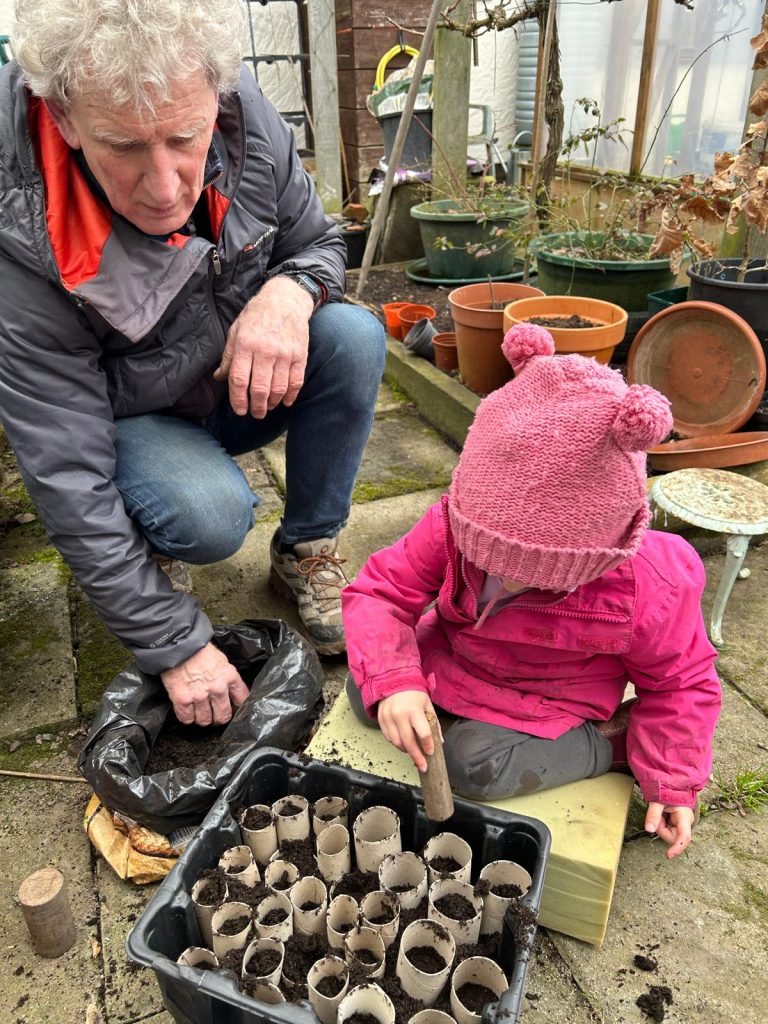
Unbleached cardboard toilet roll inners make fantastic seed pots. We love using them in the Little Muddy Boots garden as they’re perfect for little hands (see our blog for some great tips on growing seeds with children). Once a seedling has grown, the entire tube can be planted outside straight into the ground as the cardboard will biodegrade. Just check that any tubes you use aren’t inked or bleached with chemicals.
To make your toilet roll seed pot, snip three to four 2cm cuts in the tube; fold into a base; fill with soil; make a small hole with your finger; and pop your seed or bean in. Cover with a little soil and keep it damp. Then wait for the magic to happen.
If using plastic, consider reusing items from around the home such as fruit punnets instead of buying new trays.
Plastic drinks bottles can also have the bottoms cut off and be placed over any growing seedlings to create a mini greenhouse effect – this is another sight you may see at your local LMB garden!
Environmentally-friendly compost
When buying compost, it’s important to use a peat-free and natural variety. Peat is a key carbon sequester. It stores carbon through photosynthesis and has a net cooling effect on the planet. Peatlands are also ecologically-important habitats for a variety of unique plants and animals. They support biodiversity while performing other functions like reducing flood risk.
Not all compost is peat-free so do check the label. Removing peat from peatlands releases carbon into the atmosphere and drains these valuable ecosystems.
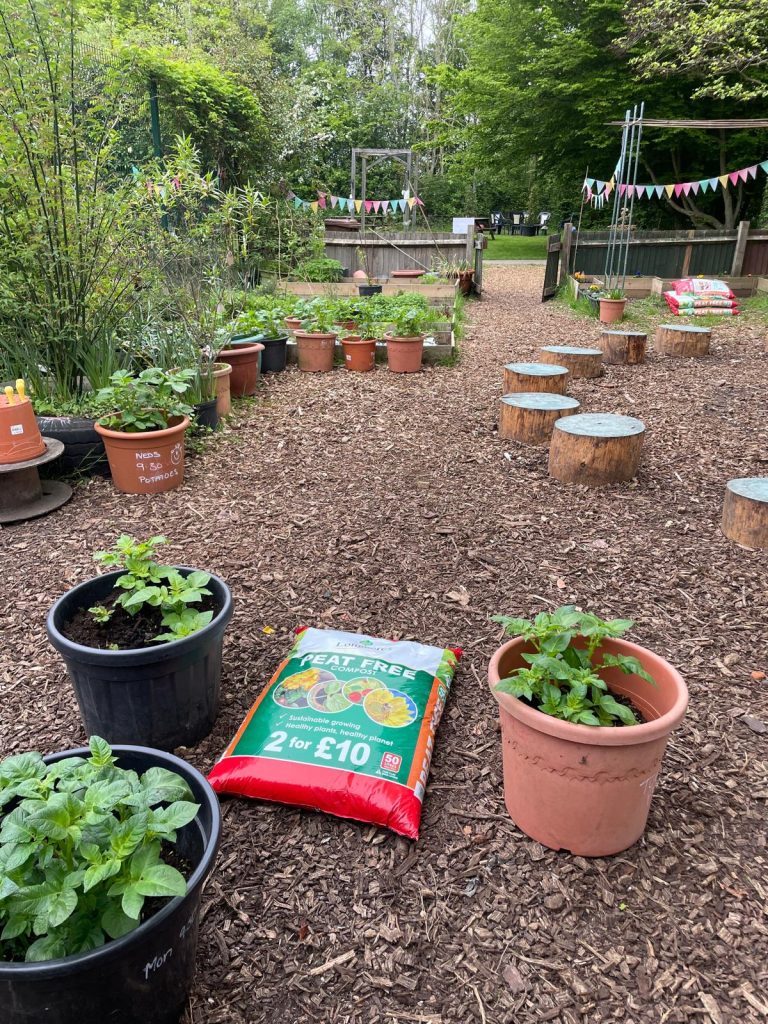
If using a compost with feed added, it is worth checking that the feed is natural (and also, child and pet-friendly if required) and won’t upset the natural environment in your garden.
Making your own compost at home is a fantastic way to use up food waste and create an eco- and purse-friendly compost.
Natural pest control
Another sight you’re sure to see in our Little Muddy Boots gardens is that of natural pest control.
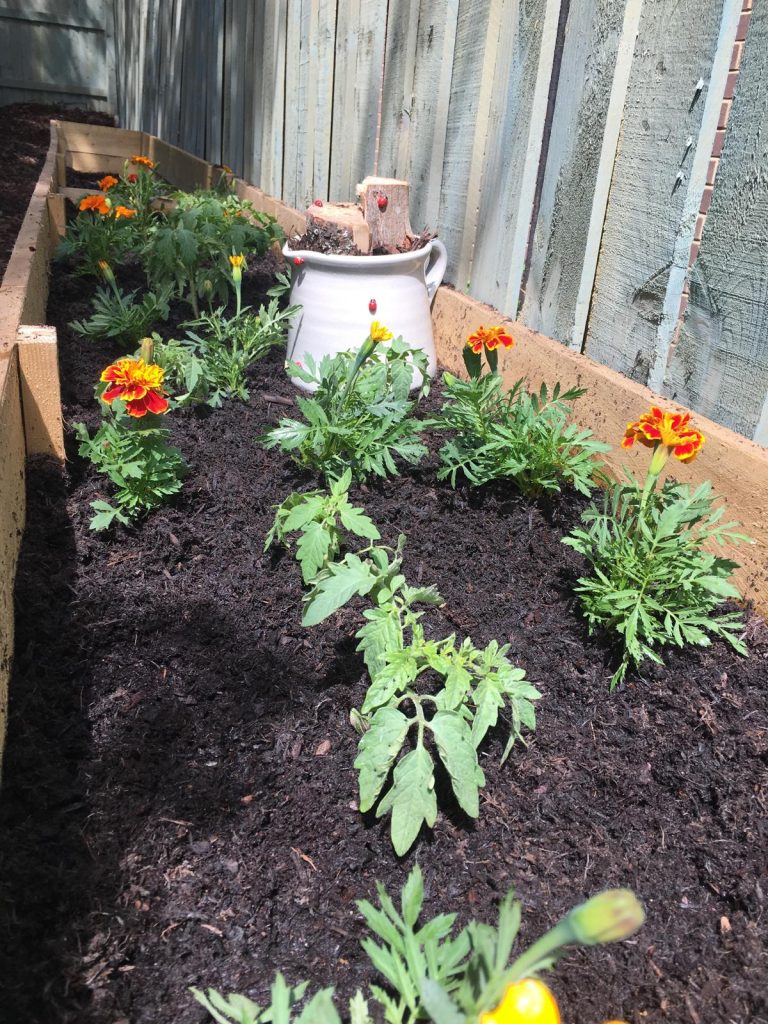
We love the method of companion planting. This is a great way to repel minibeasts and help keeping your plants healthy and pest-free without harmful chemicals.
An example would be planting marigolds alongside tomato plants. Aphids, whitefly and blackfly are repelled by the smell of marigolds so they make a great addition to any kitchen garden, big or small!
Lavender is another useful plant. It attracts lots of wonderful pollinators, so can be useful to grow near veggies like tomatoes or beans. However, its strong scent helps to deter some insect pests.
We’d also recommend growing carrots and leeks together. The scent of carrots repels leek moth while the smell of leeks will deter carrot fly – a win-win for both veggies!
If you fancy your hand at growing your own food this year, take a look at our blog for 6 ideas on how to grow fruit and veg in a small space.
Create a pollinator haven
This leads us nicely onto our next tip for sustainable gardening. No Mow May is a yearly challenge that encourages gardeners to let their lawn grow for the month of May without mowing it. However, if you have the space, why not allocate an area of your garden for our pollinating friends? Plant some grasses and wildflowers and allow it to grow wild. This will attract pollinators to your outside space, helping to keep your plants happy and supporting local insect populations.
Save water
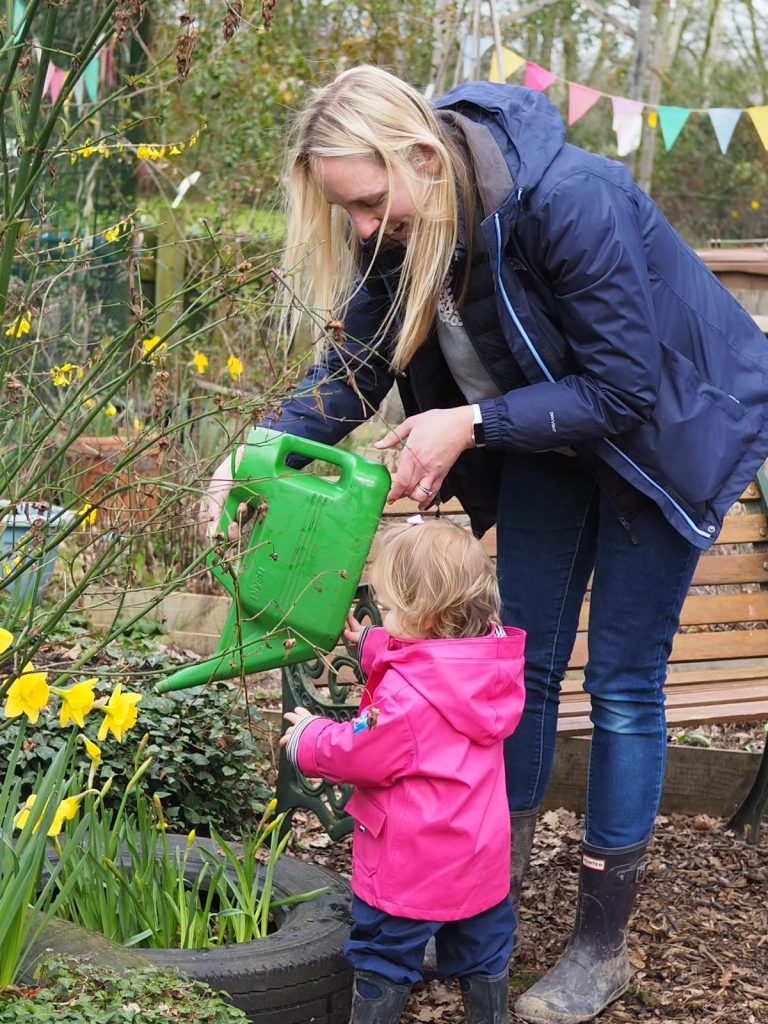
Water conservation is increasingly important. With a warming climate and increase in extreme weather events, such as heatwaves, it’s important to be responsible when it comes to watering our gardens. Water butts are a great way to help save water. They collect rainwater run-off from roofs and store it for later use.
This reduces using mains water, saving money and resources. If you don’t have the space for a water butt, try watering your garden with a watering can instead of straight from a hose as this will help to reduce water wastage.