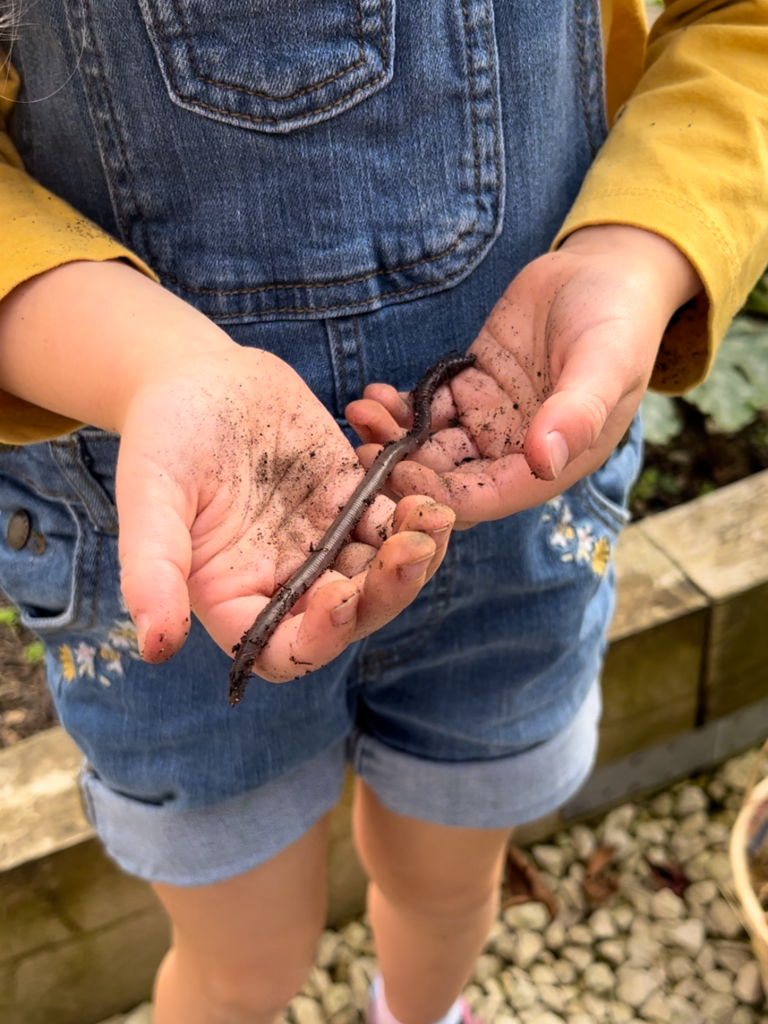
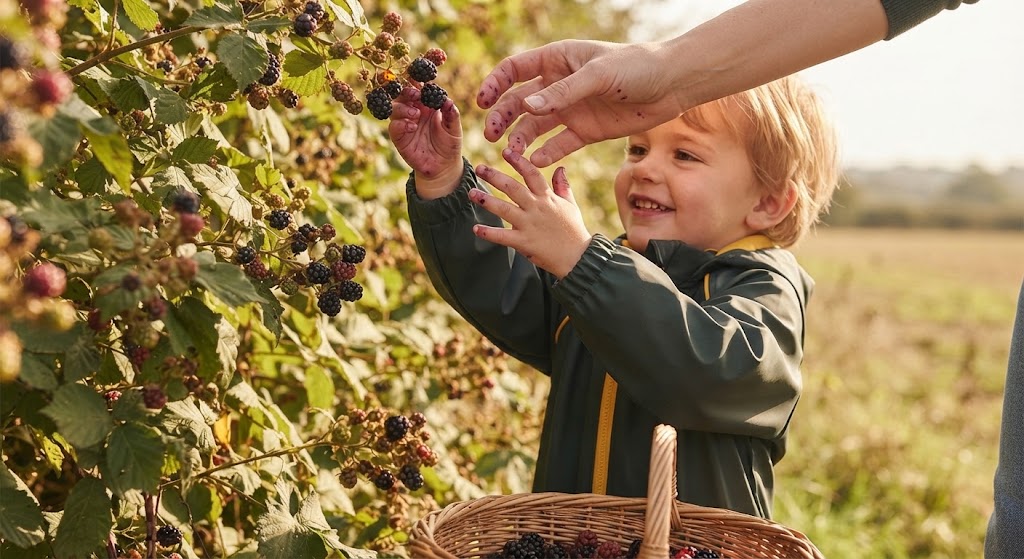
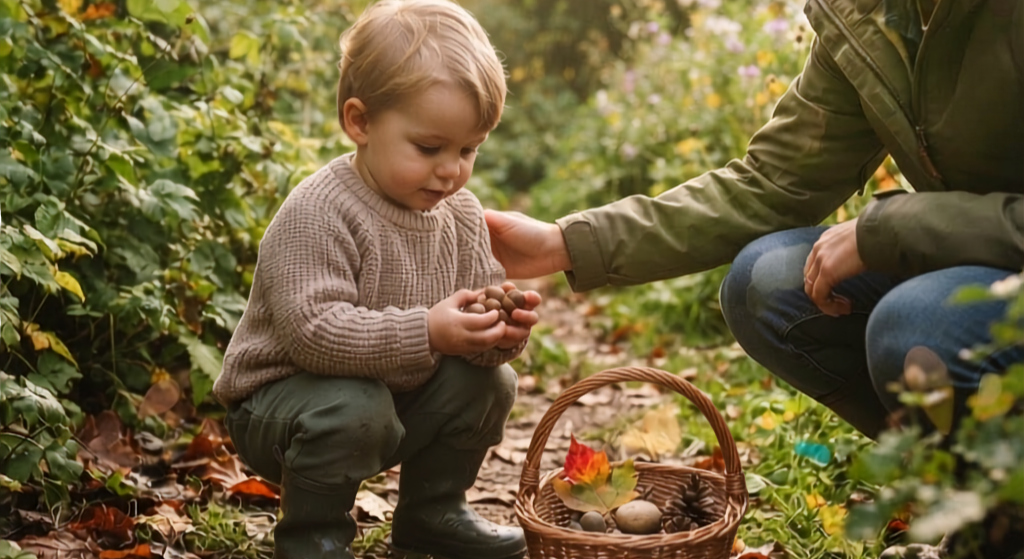
There is a magical feeling in the garden during June. The mornings are beautifully warm, the bees are humming a steady tune, and everywhere you look, nature is putting on a spectacular, colourful show. For little ones, June is a sensory wonderland. The grass is tall enough to hide in, and the flowers are bursting with vibrant colours and fascinating shapes just waiting to be explored.
Taking toddlers into the garden at this time of year is all about sparking that early sense of wonder. June in the Southeast of England brings some of our most beloved, classic British blooms into full glory. With little hands and big discoveries in mind, let’s take a stroll through the garden to see what we can find blooming this month.
The Friendly Giants: Alliums
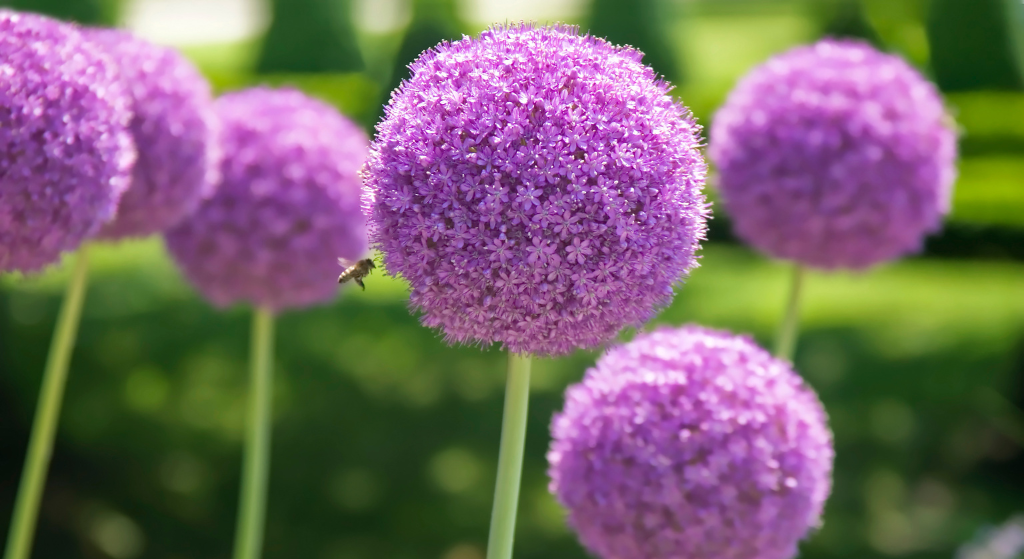
Towering high above the flowerbeds like giant purple pom-poms, alliums are an absolute favourite for young children. They look like something straight out of a fairytale book.
- For the Littlest Muddy Booters: Encourage your toddler to gently look at the shape. It looks just like a giant lollipop or a firework frozen in the sky.
- A Fun Fact for Parents: Alliums are actually part of the onion and garlic family. If you gently brush the leaves, you might catch a faint, familiar savoury scent. Bees absolutely adore them because their spherical heads are packed with dozens of tiny, nectar-rich flowers.
The Sensory Queens: English Roses
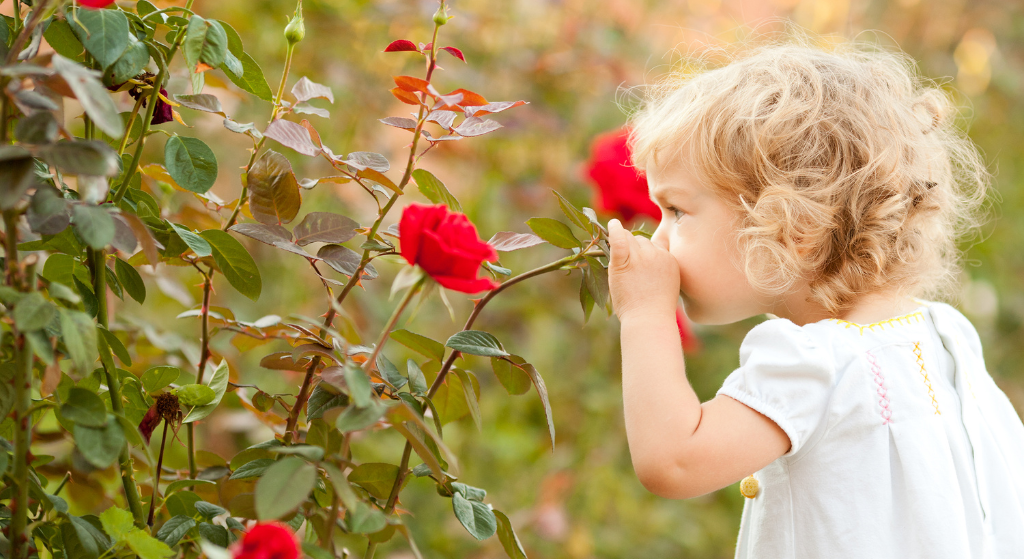
Nothing says a British summer quite like the classic rose. June is their moment to truly shine, filling the warm garden air with the sweetest perfume.
- For the Littlest Muddy Booters: This is a wonderful moment to practice gentle touching. Encourage your child to use just one soft finger to feel the velvety petals. Have a close sniff together, does it smell sweet like strawberries, or fresh like rain?
- A Fun Fact for Parents: Roses have been grown in UK gardens for centuries. Beyond looking beautiful, their petals can be used after they drop for brilliant sensory play, such as making “rose petal soup” in a mud kitchen or pressing them into playdough.
The Wild and Wavy: Foxgloves
Peeking out from shady corners and woodland edges, foxgloves stand tall with their beautiful speckled bells stacking up towards the sky.
- For the Littlest Muddy Booters: Look closely at the little spots inside the bells. They look like tiny freckles. Can you count how many bells are on one stem?
- A Fun Fact for Parents: Those beautiful speckles are actually nature’s guide maps. They act as “honey guides” for bumblebees, showing them exactly where to land to find the sweetest nectar. A gentle reminder for the family: while they are beautiful to look at, foxgloves are poisonous, so this is a great flower to practice looking at with our eyes rather than touching.
The Cheerful Sunflowers-in-Waiting: Oxeye Daisies
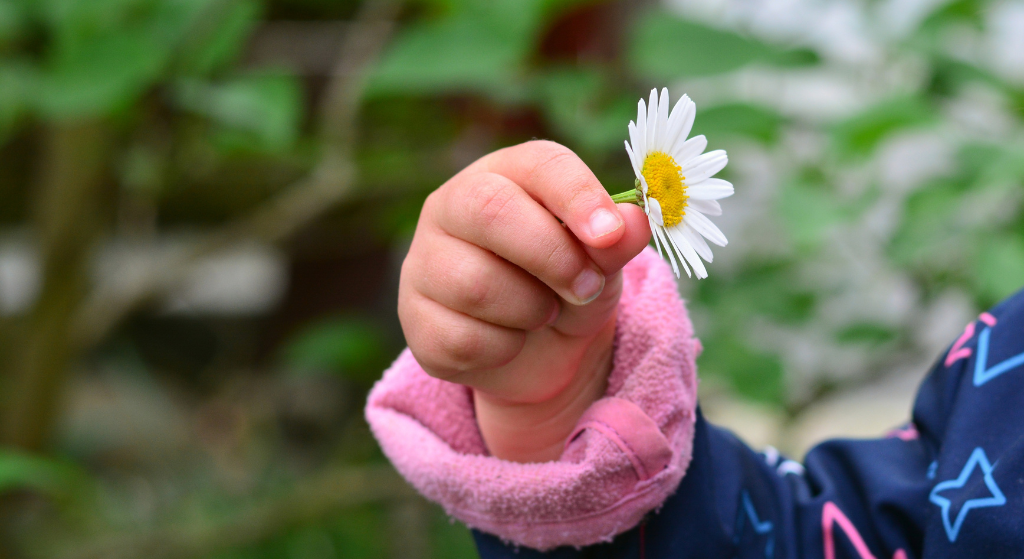
These look like the traditional daisies we find in the lawn, but grown-up. They stand tall in wild patches and borders, swaying happily in the June breeze.
- For the Littlest Muddy Booters: Play a game of peek-a-boo through the tall daisy stems. The bright yellow centres look like happy little suns surrounded by white clouds.
- A Fun Fact for Parents: Oxeye daisies are fantastic for wildlife gardens. They attract a huge variety of beneficial insects, from beetles to butterflies, making them a bustling hub of activity on a sunny June afternoon.
Simple June Flower Activities to Try at Home
Getting outside and exploring the garden together is a wonderful way to build confidence and curiosity. Here are a few simple ways to enjoy June blooms today:
Go on a Colour Hunt
Take a small bucket or an empty egg box into the garden. See if you can spot a flower for every colour of the rainbow. Look for deep purples, bright yellows, soft pinks, and vibrant whites.
Shadow Drawing
On a bright, sunny morning, place a piece of paper on the ground next to a tall flower like an allium or a daisy. Watch how the sun casts a beautiful shadow onto the paper, and let your toddler trace or scribble over the shapes.
Every season brings new adventures, and June is truly one of the most vibrant times to watch our children grow alongside nature. With muddy hands and happy hearts, there is so much to learn and discover just outside the back door.
Ready to get outside and make some muddy memories? Book your Little Muddy Boots class today.